
Guides · 6 min read
Word games for kids: spelling, vocabulary and two languages
Children meet new words all day, in books, at school, in songs and in conversation. Word games give them a relaxed way to play with those words: to take them apart, swap letters, find opposites and guess meanings from clues. Because it feels like a game, many children will happily try a word they would avoid in a spelling test.
This guide explains what different kinds of word games practise, gives ideas you can play at home with no equipment at all, and offers suggestions for families who speak two or more languages. In many Indian homes children switch between languages every day, and that is a real strength you can build on.
What word games practise
Different word games ask for slightly different skills. It helps to know which is which, so you can pick a game that suits what your child enjoys or finds hard.
- Spelling: unscrambling letters or changing one letter at a time asks a child to look closely at how a word is built.
- Vocabulary: guessing a word from a clue, or matching a word to its meaning, brings in words a child half knows and makes them more familiar.
- Flexible thinking: analogies and odd-one-out puzzles ask a child to look at a word from more than one angle. Is a tomato grouped with fruit or with vegetables? It depends on the rule.
- Careful reading: riddles reward reading every word, because the trick is often hidden in a small detail.
- Listening: spoken games, such as rhymes and I spy, practise hearing the sounds inside words.
Word games on GoKith
Letter Shuffle gives a set of mixed-up letters and a category clue, such as animals or food. Many children around 8 to 10 like starting with short words and then trying longer ones. Saying the letters out loud often helps.
Word Steps is a word ladder: change one letter at a time to turn one word into another, with every step a real word. For example, cat can become cot, then dot, then dog. It practises spelling and step-by-step planning together.
Word Links has analogies, opposites and odd-word-out puzzles. These are good to talk through, because there can be more than one reason a word does not belong, and explaining your reason is half the fun.
For riddles, try Riddle Room, or Paheli, which has rhyming riddles in the style of the traditional Indian paheli about mangoes, kites, monsoon clouds and diyas.
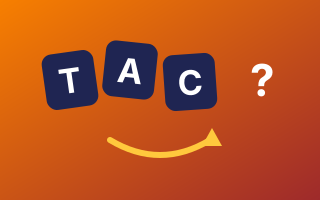 Letter Shuffle
 Word Steps
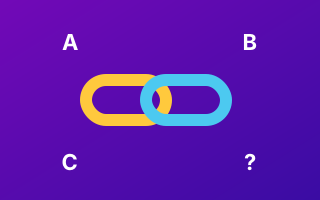 Word Links
Word games you can play anywhere
Some of the best word games need no screen, no paper and no preparation. They work in a car, at a bus stop or while waiting for food.
- Last letter, first letter: one person says a word, and the next must say a word starting with its last letter. Stick to a theme, such as animals or cities, to make it harder.
- Twenty questions: one person thinks of an object, and the others ask yes or no questions to find it. Good questions narrow things down, which is a useful habit in its own right.
- Opposites race: call out a word and see how fast someone can give its opposite. Then try words that have no clear opposite, such as table, and talk about why.
- Rhyme chain: take turns adding a word that rhymes with the first one until someone is stuck.
- Hidden words: pick a long word on a sign or a packet and see how many shorter words you can make from its letters.
- Describe it without saying it: describe an object without using its name or the obvious words, and let others guess.
Playing in two languages
Many Indian families speak one language at home, another with grandparents and English at school. Word games are a gentle way to keep every one of those languages active, and to show children that each one is worth playing with.
Keep the mood light. The aim is to enjoy words in both languages, not to test or correct every slip. If a child mixes languages in one sentence, that is normal and nothing to worry about.
- Two-language I spy: say 'I spy something that is red' in one language, and the guesser answers in the other.
- Translation pairs: name a word in one language and ask for it in the other. Start with familiar themes like food, family and colours.
- Riddle swap: ask a grandparent for the riddles they grew up with in their language, then try to make up one in English together.
- Same game, two rounds: play last letter, first letter in Hindi, Tamil or your home language for one round, then in English for the next.
- Notice the differences: talk about words that do not translate neatly, or sounds that exist in one language and not the other.
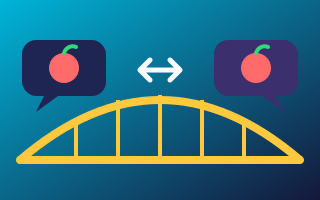 Word Bridge
 Paheli: Riddles of India
Using Word Bridge with bilingual children
Word Bridge matches everyday words across English, Hindi and Spanish, such as apple, सेब and manzana. You can choose a Match mode, a Memory mode where you flip cards to find pairs, or a Quick quiz. Themes include food, animals, family, colours, numbers and school, and easier levels show picture clues.
A nice way to use it is to sit together and say each word aloud as it is matched. If your home language is not one of the three in the game, add a spoken round of your own: after each match, ask your child to say the word in your home language too. GoKith itself can be used in 11 languages, so children can also read game instructions in the language they are most at home in.
Tips for parents
A few small habits make word games more useful and more fun.
- Play alongside your child rather than watching. Let them see you get stuck and try again.
- Ask how they found the answer, not just whether it was right. Explaining a guess out loud is good practice for clear thinking.
- Keep a family word list on the fridge for new or funny words you meet in games, in both languages.
- Choose the right level. A game that is a little hard is good; one that is very hard every time is not.
- Stop while it is still fun, and come back to the same game another day.