
Guides · 7 min read
Choosing brain games and puzzles by age: a practical guide
A good puzzle sits just above what a person can already do. Too easy and it is dull. Too hard and it becomes a source of frustration, and many children quietly decide they are 'bad at puzzles' when the real problem was the choice of puzzle.
This guide gives rough age ranges, but children vary enormously. A reader of seven may love word games, while a twelve-year-old may still prefer short, visual puzzles. Use the ages as a starting point, then watch the person in front of you. That matters more than any list.
Ages 5 to 7: short, visual and done together
GoKith is written for players of about 8 and up, but younger children often enjoy a few games with an adult beside them. At this age, puzzles work best when the goal is visible and the rules fit in one sentence: match the picture, copy the pattern, sort the colours.
Keep sessions short, five or ten minutes, and stop while it is still fun. Read any instructions aloud and let the child do the tapping. Praise what they tried, not only whether they got it right: 'You checked every row before you chose' is more useful than 'Well done'.
Good starting points are the small 4×4 grids at the beginning of Sudoku, where only the numbers 1 to 4 are used, and picture games such as Mirror Match and Echo Grid. Tube Sort works well too, because the goal of one colour per tube is obvious at a glance. Quick reaction games like Freeze! suit children who need to move about a little.
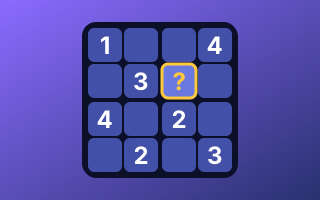 Sudoku
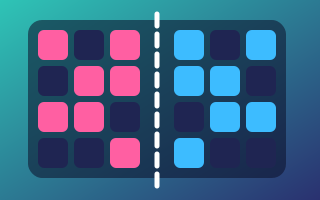 Mirror Match
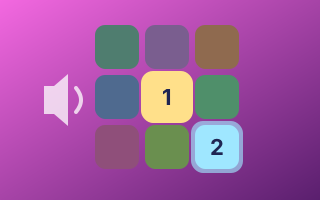 Echo Grid
Ages 8 to 10: rules, stories and first strategies
Many children around 8 to 10 start to enjoy rules for their own sake. They like knowing exactly what is allowed and finding a clever way to win within it. This is often the age when they first discover that thinking ahead helps.
Puzzles with a small story or character keep them going: a robot to steer, a penguin sliding on ice, a riddle to crack. Number puzzles should use sums they can do comfortably in their head, so the challenge is the logic rather than the arithmetic.
Try Robot Route for planning a sequence of moves, Number Pyramid for addition that feels like a puzzle, and Paheli for rhyming riddles. What's Next? and Ice Slide are also good fits. Expect them to want to skip ahead to harder levels. Let them try, but make it easy to step back without embarrassment.
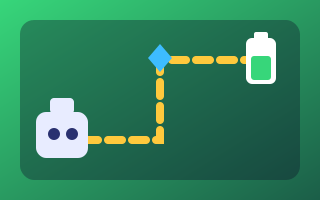 Robot Route
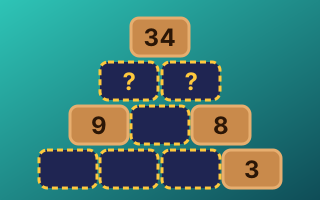 Number Pyramid
 Paheli: Riddles of India
Ages 11 to 13: real logic and longer puzzles
Many children in this range can hold several facts in mind at once and follow an 'if this, then that' chain over a few steps. They can sit with a puzzle for longer, and they often enjoy proving that an answer must be right, not just guessing it.
This is a good time for logic puzzles with a single, provable solution and for puzzles that hide a bit of algebra. Truth Tellers asks who is lying, which needs careful 'suppose he is telling the truth' reasoning. Balance Scale works out weights from balanced scales, which is the thinking behind equations without any letters. Code Cracker rewards keeping track of clues across several guesses.
If they like pictures more than words, Pixel Logic reveals an image as you solve it. If they like words, Word Links offers analogies and odd-word-out puzzles.
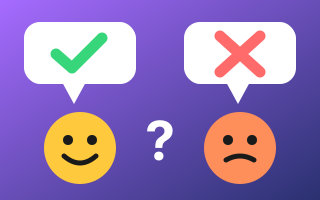 Truth Tellers
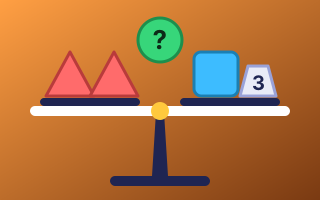 Balance Scale
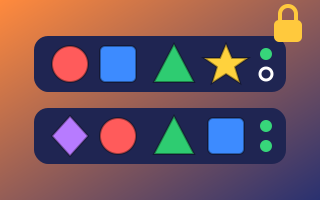 Code Cracker
Teenagers: choice, challenge and a bit of competition
Teenagers usually want to choose for themselves, so offer a few options rather than a single assignment. Many enjoy puzzles that feel properly hard, timed challenges, and the chance to beat a friend or a parent.
Good choices include Kakuro, where every run of squares must add up to its clue, Chaturanga Puzzles, which are chess tactics such as finding checkmate, and Lamp Logic, where each tap flips a lamp and its neighbours. The Challenge Yourself category collects the tougher puzzles in one place.
Competition can help here. A friendly challenge link, a family leaderboard on the fridge or a race between siblings on the same daily puzzle often does more than any reminder to 'go and practise'.
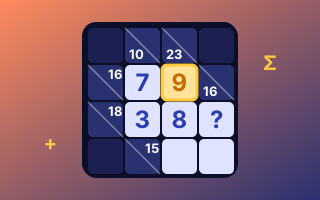 Kakuro
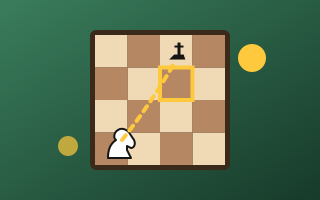 Chaturanga Puzzles
 Lamp Logic
Adults and grandparents: calm, familiar and social
Adults often prefer puzzles they can finish in a tea break and come back to tomorrow. Daily puzzles suit this well. Elephant Parade, Diya & Lotus and Rangoli Trail each give a fresh puzzle every day, the same for everyone, so a family can compare times over breakfast.
Many grandparents enjoy games that feel familiar. Traditional board games such as Navakankari or Pallanguzhi, and folk tales in Birbal & Tenali's Wit, are a natural way into playing with grandchildren. Ask them to teach the child the version they grew up with.
For older players, check the basics: large enough text, a screen held at a comfortable distance, and no time pressure unless they want it. Calm games such as Lighthouse Watch let them play at their own pace.
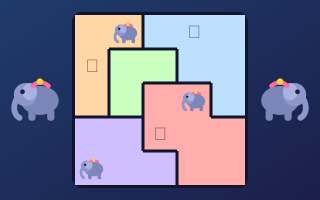 Elephant Parade
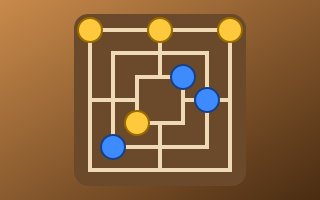 Navakankari
 Birbal & Tenali's Wit
How to pitch the difficulty
Aim for a puzzle the player can solve most of the time, with some effort. If they win every time without pausing, move up. If they rarely finish, move down. Most GoKith games have a level ladder, so stepping up or down is a single tap.
Change only one thing at a time. A bigger grid, a new rule or a time limit each adds difficulty on its own. Adding all three at once is usually too much.
When you introduce a new kind of puzzle, start at the very first level even for a capable player. Easy early levels teach the rules, and a quick early win builds the confidence to keep going when it gets harder.
Signs a puzzle is too hard or too easy
Watch behaviour more than results. A few wrong moves are part of puzzling, but some patterns tell you it is time to adjust.
- Too hard: random tapping, repeated guessing without looking, sighing, giving up within a minute, or asking you to 'just do it'.
- Too hard: the same mistake again and again, which often means a rule has not been understood. Go back and explain it with an easy example.
- Too easy: finishing fast with no pauses, talking about something else while playing, or complaining it is boring.
- About right: pauses to think, talking through options aloud, a small 'oh' when something clicks, and wanting one more go.
- Either way: tiredness or hunger make every puzzle feel harder. A short break often fixes more than a change of level.