
Guides · 6 min read
How to build a calm 10-minute daily puzzle habit
A puzzle a day is one of the easiest habits to keep. It is short, it has a clear finish, and there is always a small moment of satisfaction when the last piece clicks into place. For a child it can be a pleasant start to homework time. For an adult it can be a quiet break with a cup of tea.
The trick is to keep it small, regular and enjoyable. This guide gives you a simple 10-minute routine, ideas for which puzzles to use, and ways to keep streaks and screen time in a healthy place. Everything here works for one person on their own, a parent and child together, or a whole family comparing answers at dinner.
Start smaller than you think
Most habits fail because they start too big. Thirty minutes of puzzles a day sounds good on the first evening and feels like a chore by the fifth. Ten minutes is enough to warm up, solve something properly and stop while it is still fun.
Tie the puzzle to something that already happens every day. Straight after breakfast, while dinner is cooking, or just before reading time all work well. When the habit has a fixed place in the day, nobody needs to remember it or argue about it.
Decide in advance what counts as done. On GoKith the daily goal is three levels plus one brainteaser, which takes most people around 10 to 15 minutes. You can set your own version, such as one daily puzzle and one brainteaser.
A simple 10-minute routine
Here is one routine that many families find easy to keep. Adjust the times to suit your child and your day.
- Two minutes: the daily brainteaser on the home page. It is quick, and it gets everyone thinking.
- Five minutes: one of the daily puzzles. Each one has a Today's puzzle that is the same for everyone that day.
- Two minutes: one more level of any game you are working through, or a replay of something you found tricky.
- One minute: say out loud one thing you noticed. For example, which square you were sure about first, or what you would try differently next time.
Which daily puzzles to use
GoKith has three puzzles with a new Today's puzzle every day. Each one practises a slightly different kind of thinking, so rotating between them keeps things fresh.
Rangoli Trail asks you to draw one line through every square, passing the numbers in order. It is good for planning ahead, because a careless turn early on can trap you later. Younger players often enjoy the drawing.
Diya & Lotus fills a grid so every row and column has equal diyas and lotuses, with never three the same side by side. Each puzzle has one answer you can reach by careful reasoning, so it gives a chance to practise working step by step instead of guessing.
Elephant Parade places one elephant in every row, column and colour, with no two touching, not even at the corners. It rewards marking the squares where an elephant cannot go. Many children around 9 and up enjoy it once they have seen how crosses help.
A good pattern is one daily puzzle on weekdays, picked in turn, and all three at the weekend for anyone who wants more.
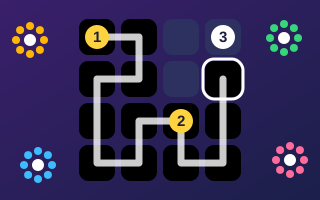 Rangoli Trail
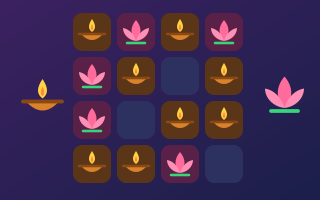 Diya & Lotus
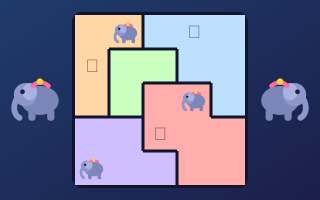 Elephant Parade
Streaks without pressure
GoKith shows your streak on the home page: the number of days in a row you have played. Streaks can be motivating, but they can also turn a pleasant habit into a source of worry, especially for children who like everything to be perfect.
Talk about the streak as a record of something nice, not a rule that must never be broken. If a day is missed because of a trip, an illness or a busy evening, say so plainly and start again the next day. The habit matters far more than the number.
- Count a good week, not a perfect week. Five days out of seven is a fine result.
- Praise the thinking rather than the speed. Ask how they worked something out, not only how fast they were.
- Let hard puzzles wait. It is fine to stop, sleep on it and finish tomorrow.
- Use hints as a last resort, and say that using one is not cheating. It is a way to learn the next step.
Share it with the family
Because the daily puzzles are the same for everyone, they make an easy family game. Each person solves the puzzle on their own device or takes turns on one, and then you compare. You can share times, but it is often more interesting to compare how each person started.
Grandparents who live far away can join in by phone. A short daily message along the lines of 'I got today's trail, did you?' is a lovely way to keep in touch, and it gives children something to talk about that is not school. You could also try the same brainteaser together at dinner and see who can explain the answer most clearly.
For bigger groups, GoKith's Play Together page has games for a whole room, such as a quiz duel or Tambola.
Healthy screen-time boundaries
A daily puzzle works best as a small, bounded part of the day rather than an open-ended session. Puzzles have a natural ending, which helps. When the daily goal is done, the screen goes away.
Agree the rules together before you start, so they do not need to be argued about every day. Keep the same rule for adults where you can; children notice when grown-ups follow their own advice.
- Set the length in advance, and use a kitchen timer if that helps.
- Play in a shared room rather than behind a closed door, especially with younger children.
- Avoid puzzles in the last half hour before sleep if they tend to make your child too alert.
- Mix in paper puzzles some days. A daily trail or grid can be copied onto squared paper and solved with a pencil.
- Stop on a good note. Finishing while it is still fun makes tomorrow's puzzle something to look forward to.