
Guides · 6 min read
Family game night ideas for mixed ages, with little screen time
A family game night does not need a plan as detailed as a wedding, but a little structure helps. Without it, the evening tends to drift into everyone on a separate phone, or one long game that the youngest player loses interest in after ten minutes.
This guide suggests a simple shape for an evening, ideas that mix a few shared screen games with games you play around the table, and ways to keep it fair when the players range from six to sixty. Screens here are a shared tool, usually one TV or one phone passed around, not a reason for everyone to look down.
Give the evening a simple shape
An hour to ninety minutes is enough for most families. Split it into three or four short blocks rather than one long game. Short blocks let the mood reset, give different people a chance to shine, and make it easy to stop at a natural point.
A shape that works well:
- Warm-up, 10 minutes: something quick that everyone can join at once.
- Main game, 25 to 30 minutes: the biggest game of the evening, with small prizes.
- Break, 10 minutes: snacks and an offline game that involves moving or talking.
- Closing round, 15 minutes: a homemade quiz or a gentle game to end calmly.
- Put phones in a basket at the start, apart from the one device you are using for the game.
Warm-up: Party Mode on one device
Party Mode is a pass-and-play brain quiz for 2 to 8 players on a single phone or tablet. Each player chooses their own level, Easy, Medium or Hard, so a child and a grandparent answer different questions and still compete on equal terms. It runs entirely on the device, with no links or sign-up.
It makes a good warm-up because turns are short and everyone is involved straight away. Let the youngest player choose the first round, and let the adults pick Hard. Watching a parent struggle with a tough question is half the fun for a child.
If you prefer a board game for the warm-up, Moksha Patam, the old Indian game that became snakes and ladders, can also be played pass-and-play. You can find it with the other group games on the Play together page.
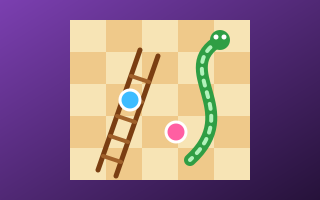 Moksha Patam
Main game: Tambola or Brain Bingo
For the main event, choose a game where everyone plays at the same time. Tambola is ideal. One person is the caller, everyone else marks a ticket, and the first to complete a pattern shouts to claim a prize. With Group Tambola the numbers show on the TV in large type, players scan a QR code for a ticket on their own phone or use a printed one, and the screen checks every claim. If you have never played, a round of solo Tambola is a quick way to learn the prizes first.
If your family enjoys a little arithmetic, choose the version where the caller gives a maths clue instead of a plain number. Players work out '9 times 6' before they can mark 54.
Brain Bingo is a good alternative. The caller screen shows a maths problem or a word clue, and players solve it and mark the answer on their card. Cards can be printed, so younger children do not need a device of their own.
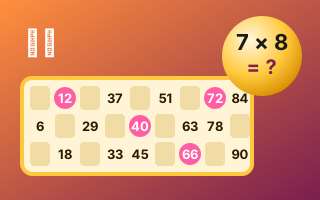 Tambola
Offline games for the break
The break is the time to put every screen away and get people moving or talking. Traditional games work well here, and many families already know them.
A few ideas, all needing little or nothing to set up:
- Antakshari: one side sings a song, and the next side must start a song with the last letter or sound of it. Teams of mixed ages work best.
- Dumb charades: act out a film, a book or a proverb without speaking while your team guesses. Let children choose from a set of easier slips.
- Raja Mantri Chor Sipahi: four players draw folded slips for the four roles, and one player must guess who holds the Chor. Families differ on who does the guessing, so agree first. It is quick, needs only paper, and every round takes a minute or two.
- Riddle round: one person reads riddles aloud and the others shout answers. You can borrow from Paheli or Birbal & Tenali's Wit, then switch the screen off and carry on with riddles the grandparents remember.
- Drawing guesses: one person draws on paper, the team guesses, no letters or numbers allowed.
 Paheli: Riddles of India
 Birbal & Tenali's Wit
Closing round: a homemade quiz
A quiz about your own family, your town or last summer's holiday is often the most memorable part of the evening. With the Quiz Maker you can write one in advance: up to 50 questions, each with 2 to 4 answer choices and an optional explanation. Then play it together in Party Mode, or share it with cousins in another city through a link.
Let an older child write the quiz. It is a satisfying job, it gives them a role that is not about winning, and they will take great care over the questions. Keep it general rather than personal, and leave out names, addresses and other private details, since quiz links can be passed on.
If you have a classroom-sized gathering, such as a festival with neighbours, a quiz with at least 40 different short answers can also be used for Brain Bingo.
Keeping it fair for younger players
Mixed-age games go wrong when the same older players win every round. A few simple adjustments keep everyone keen without making the win feel handed over.
- Use games where each player picks a level, such as Party Mode, so difficulty matches the person.
- Favour games of chance, like Tambola, for the main prize. Luck gives a six-year-old a real chance against a teenager.
- Play in mixed teams, pairing the youngest with the most patient adult.
- Give younger players a head start: an extra card, a few points, or a clue read out twice.
- Rotate jobs. Caller, quiz-master and scorekeeper are all roles a child can enjoy, and they share out the attention.
- Keep prizes small, such as choosing the next game, a sticker or first pick of the snacks, so losing a round never feels serious.
Short formats for busy weeknights
Not every game night needs to be a big occasion. On a school night, fifteen minutes after dinner is enough to keep the habit going.
Try one round of Party Mode, a single game of Tambola with only Early Five and Full House, or the same daily puzzle for everyone. Elephant Parade gives a new puzzle each day, the same for every player, so the family can compare times at the table. Any game page also has a challenge button, so a relative who lives far away can join in by playing the same puzzle and sending back their score.
Whatever you choose, end while people still want one more round. That is the feeling that brings everyone back next week.
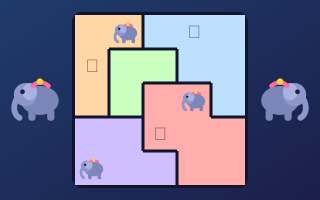 Elephant Parade